Stone, Light, and the Spaces Between
I flew into Austin a couple of days before a photography workshop, not because I needed more time with my gear, but because I needed more time with myself. There’s a particular kind of quiet that comes with arriving early in a new city—those slow walks where you’re just a person with a camera, paying attention. Before the scheduled conversations about clients, deliverables, and portfolios, I wanted to listen to the city first.
In the days before the trip, my research led me to the Lyndon Baines Johnson Presidential Library. I hadn’t heard much about it before, but as I read, it quickly became a place I knew I needed to see. I made a deliberate choice not to search for images. I wanted my first impression to be the real thing: the building in its environment, anchored on the campus, breathing in Texas light. One afternoon I followed a street that climbed a hill past the stadium and the performing arts building. As I walked, the library gradually rose into view, its pale mass slowly separating itself from the sky with each step.
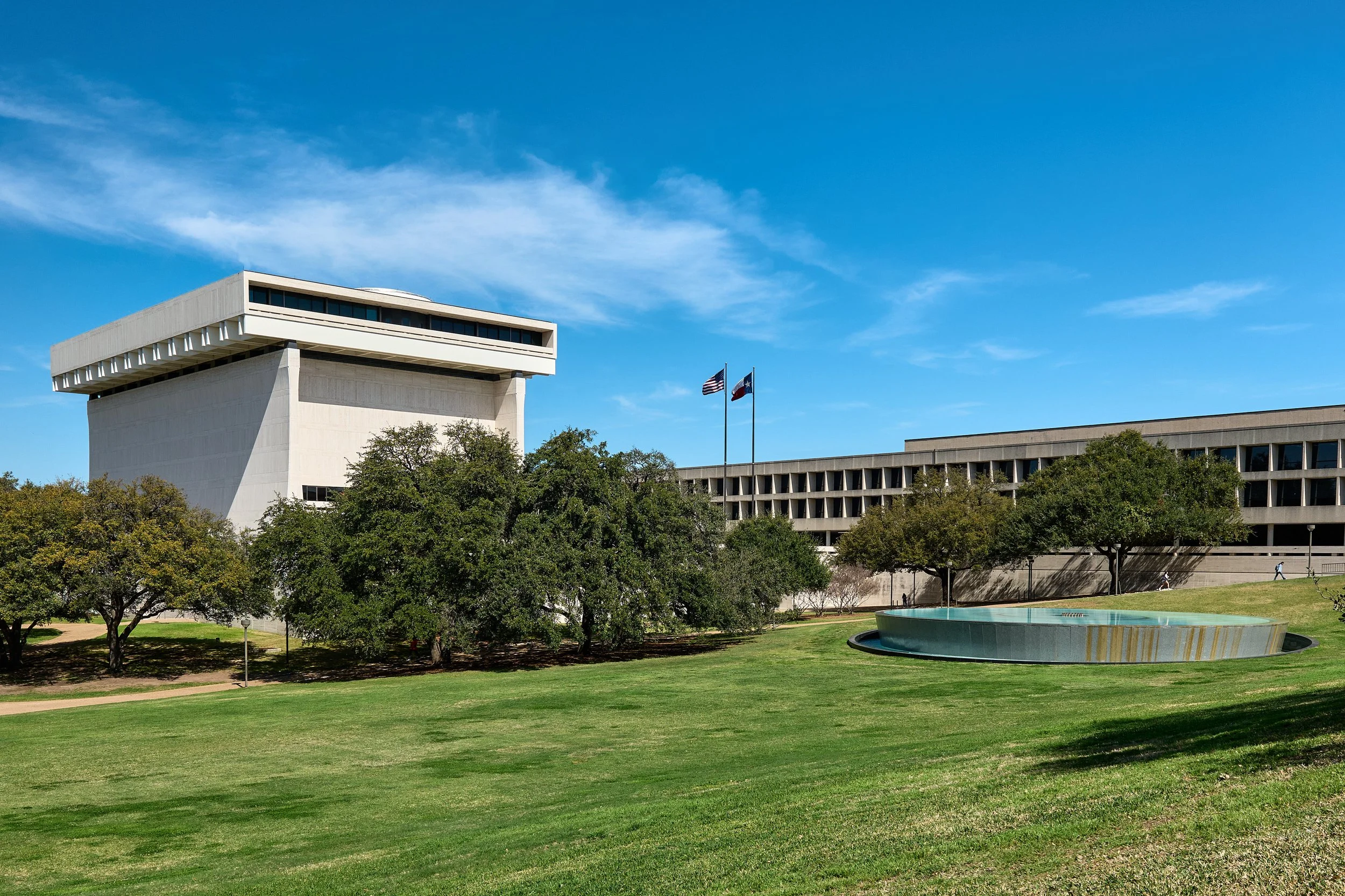
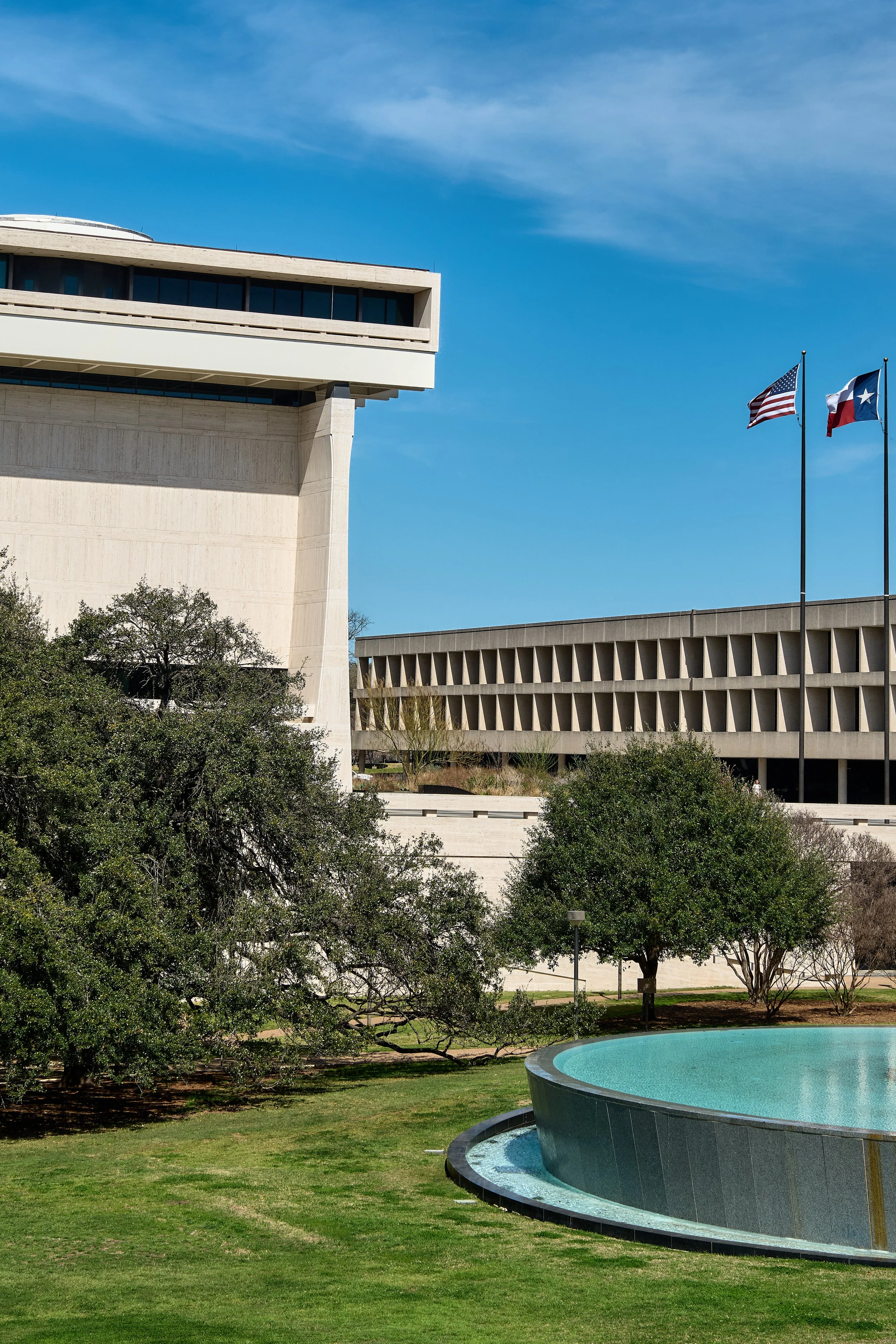
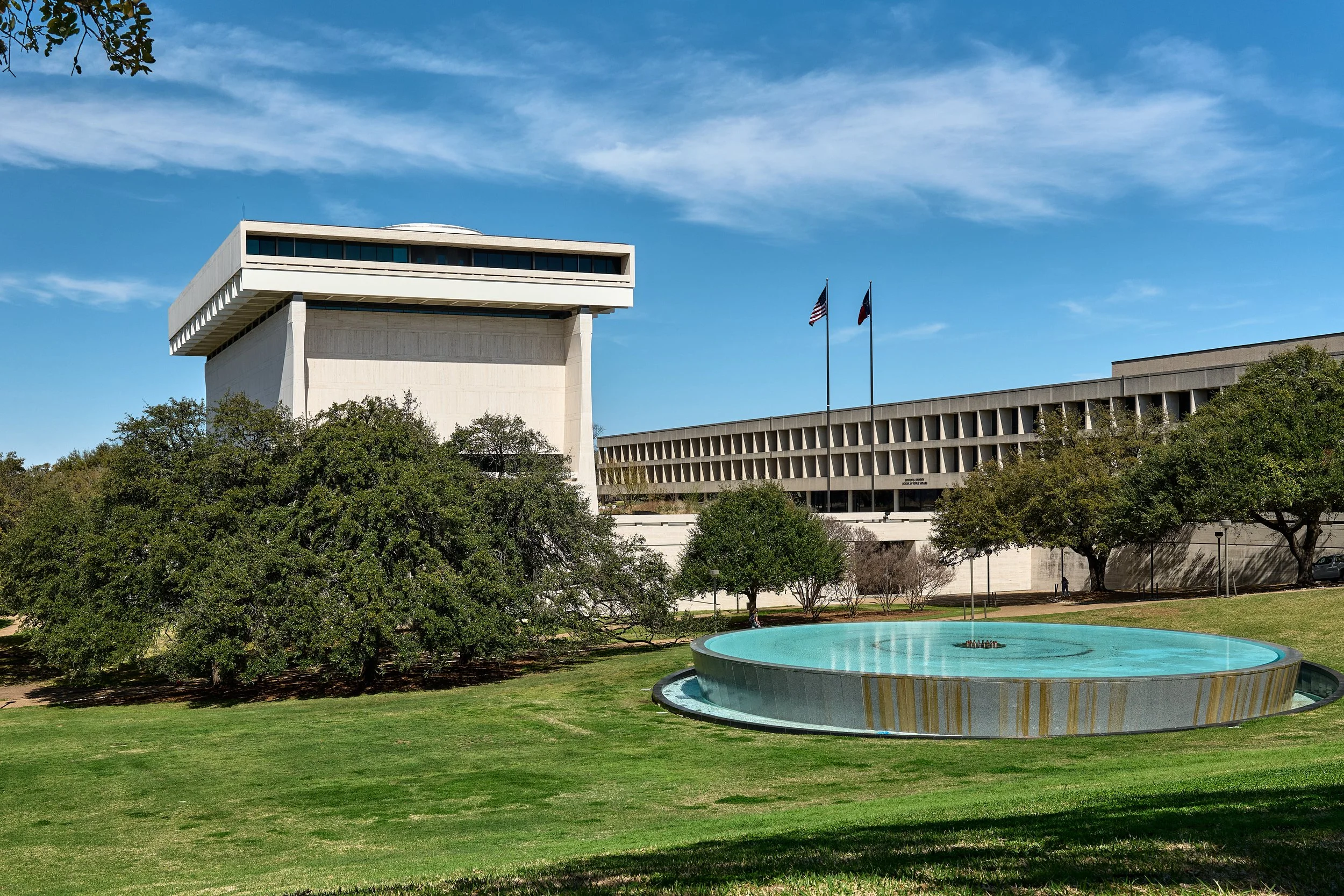
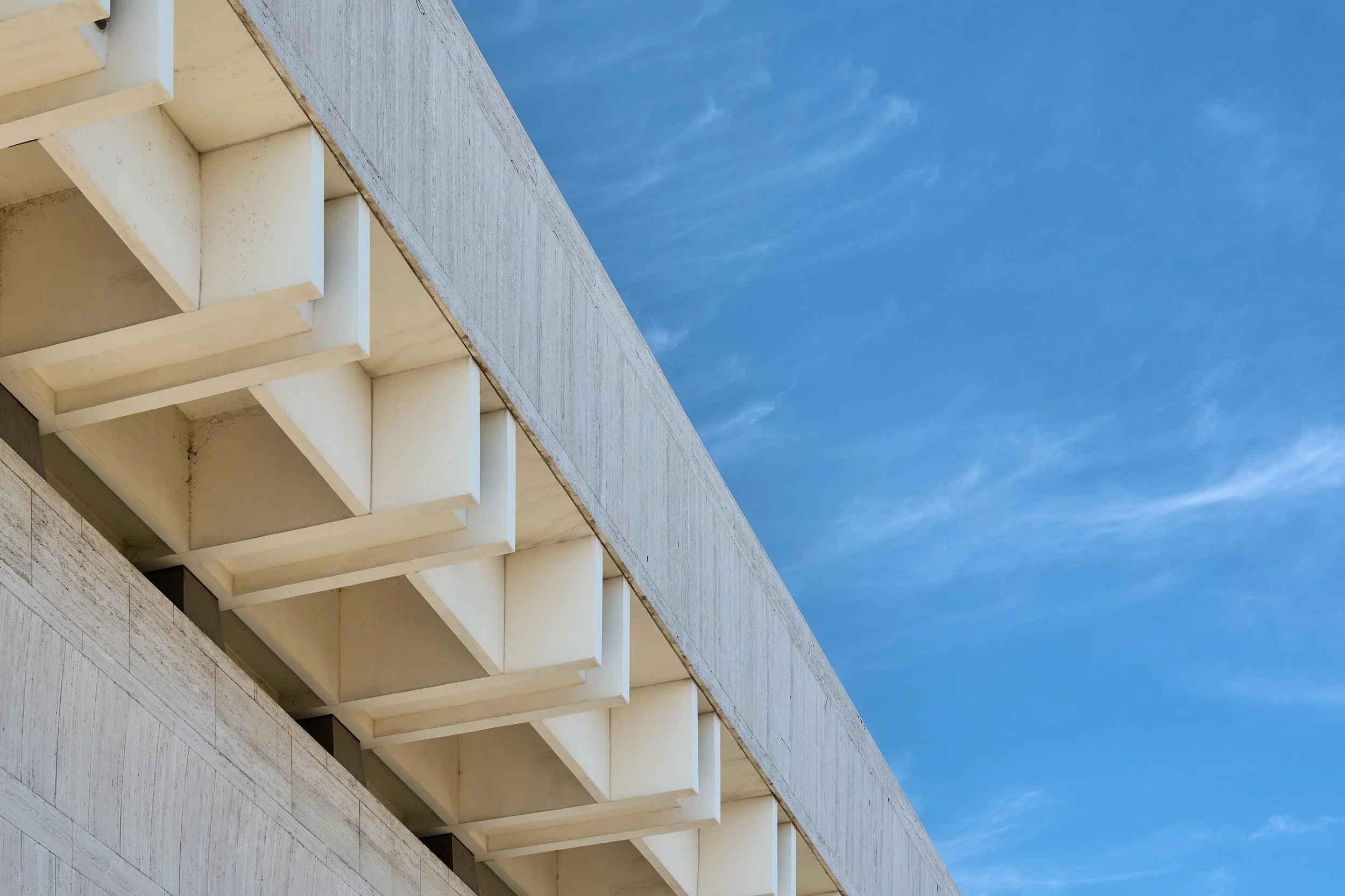
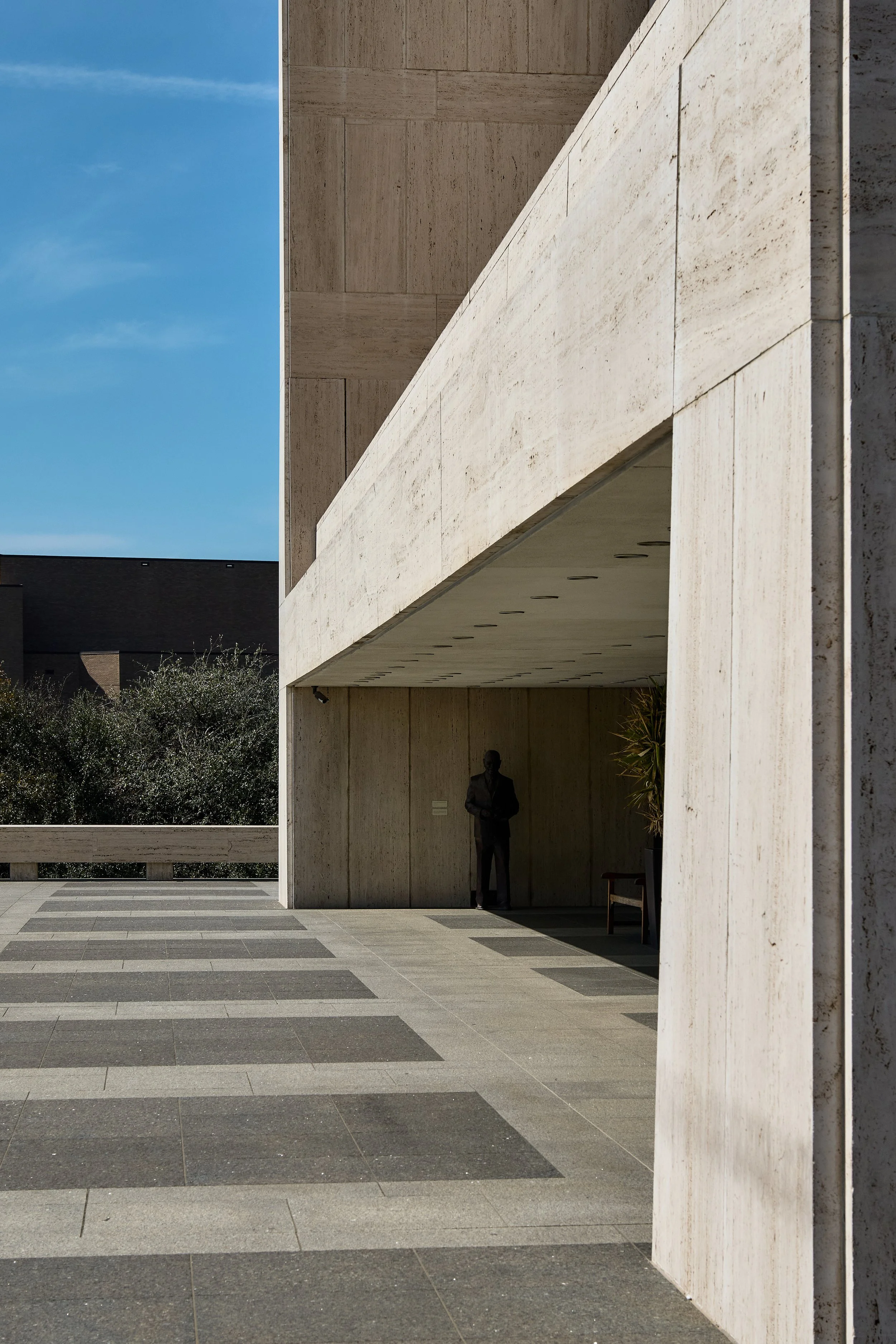
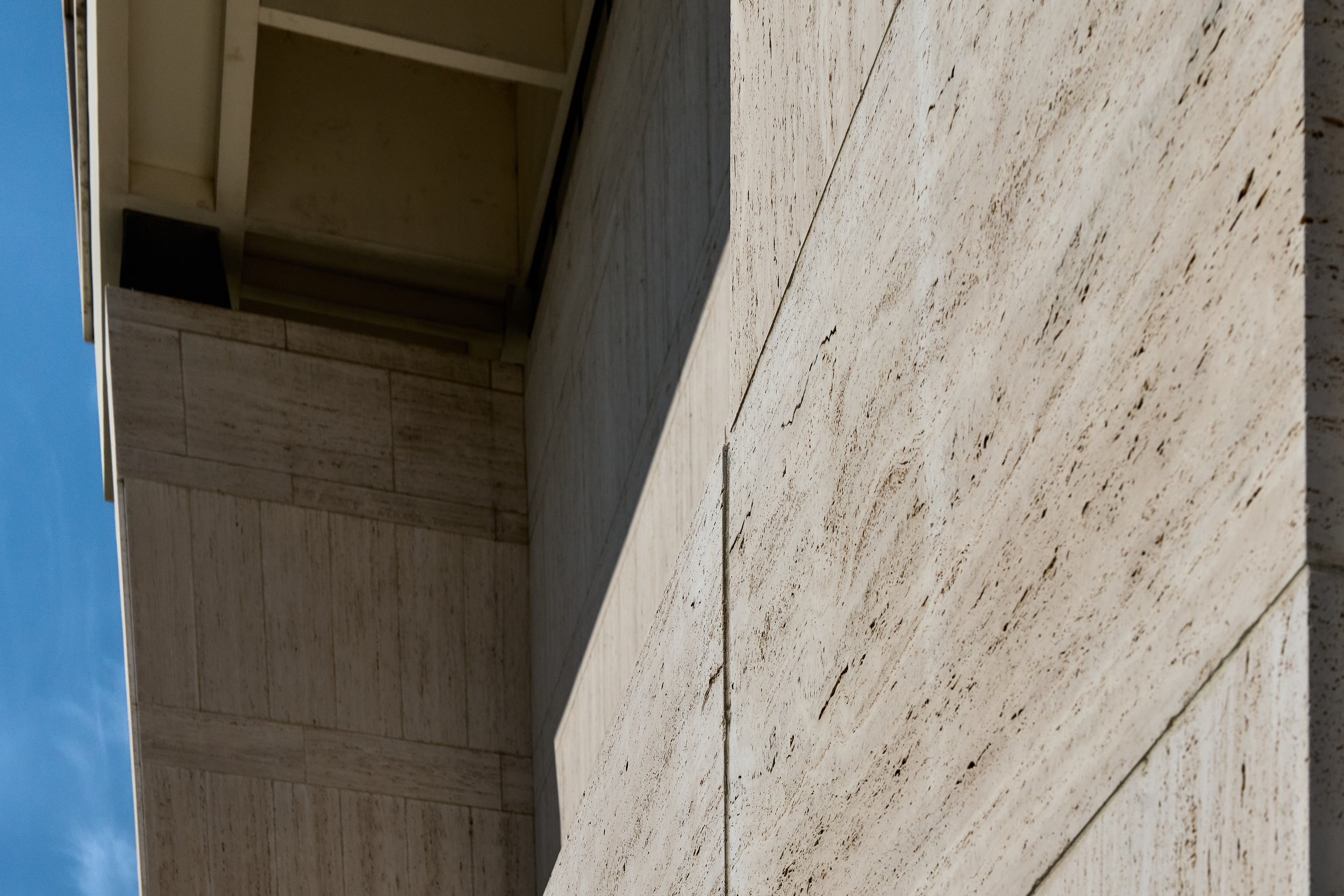
The building doesn’t simply sit in the landscape; it presses into it. A massive, pale volume rising from a broad platform, it feels like an object that has chosen its ground and intends to stay. From a distance, the travertine reads as a continuous, almost blank surface. Up close, it reveals veins, textures, and small irregularities—the quiet proof that even something monumental is made up of countless subtle decisions. The stone is cool under your fingers, creamy white but alive with gentle variations.
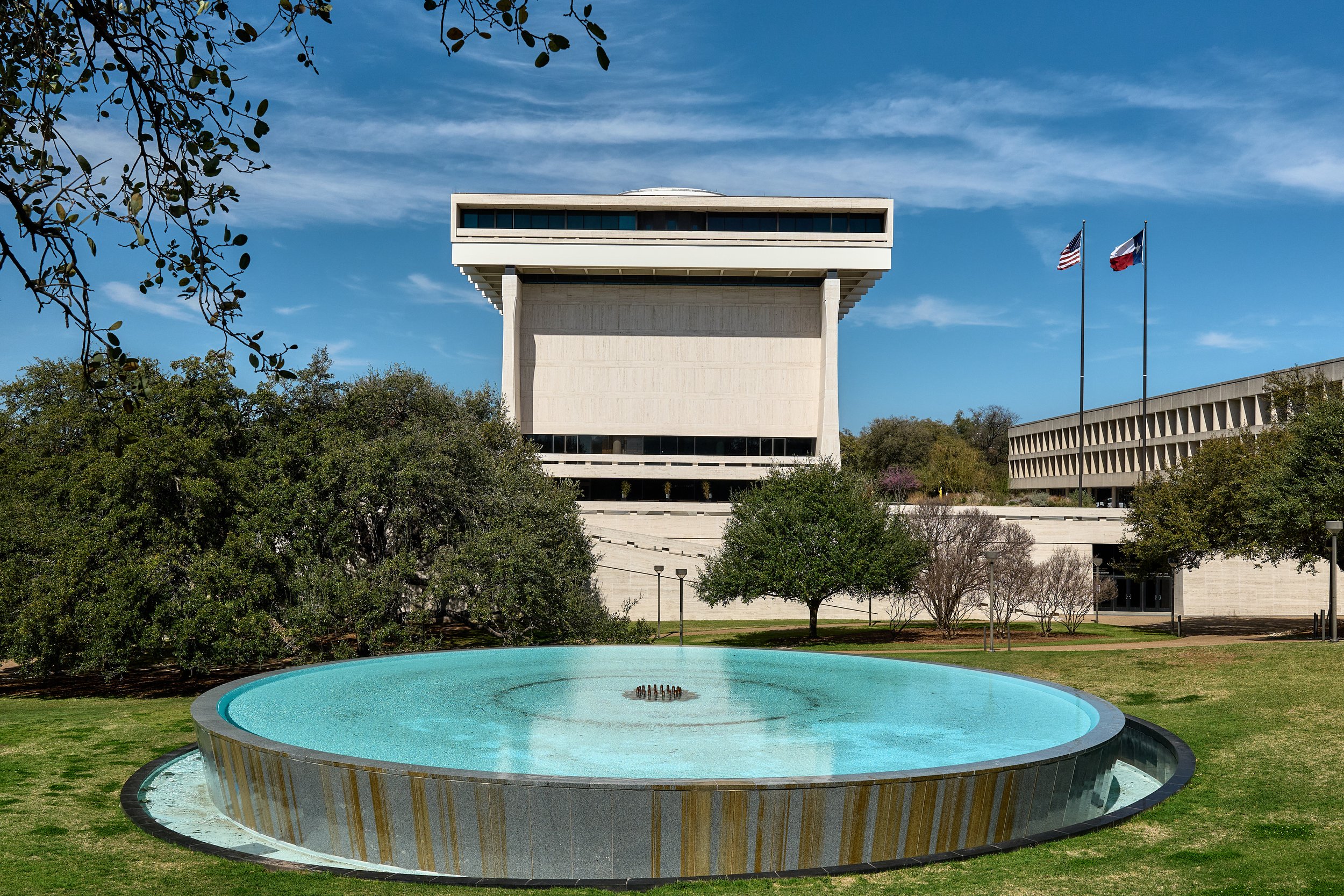
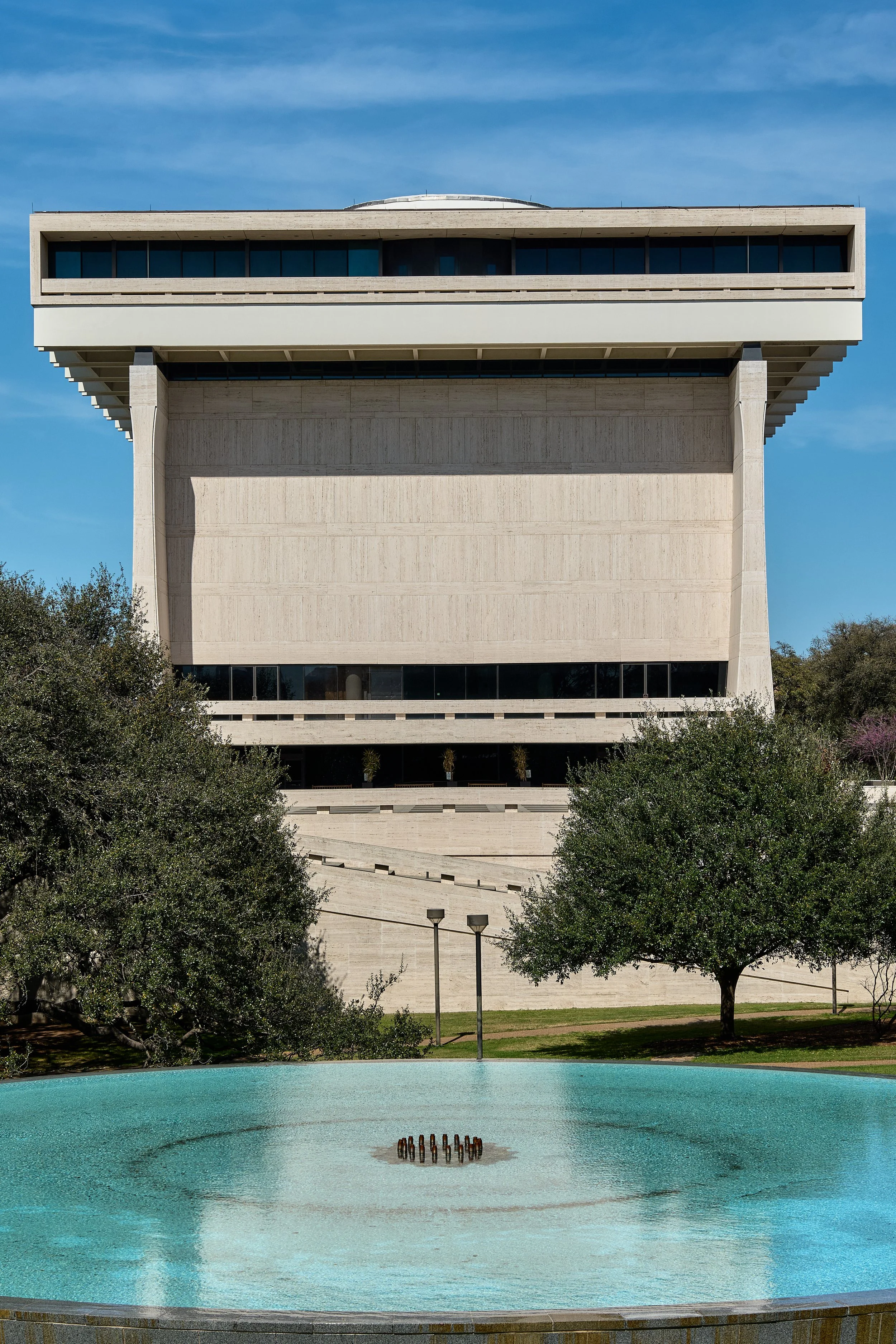
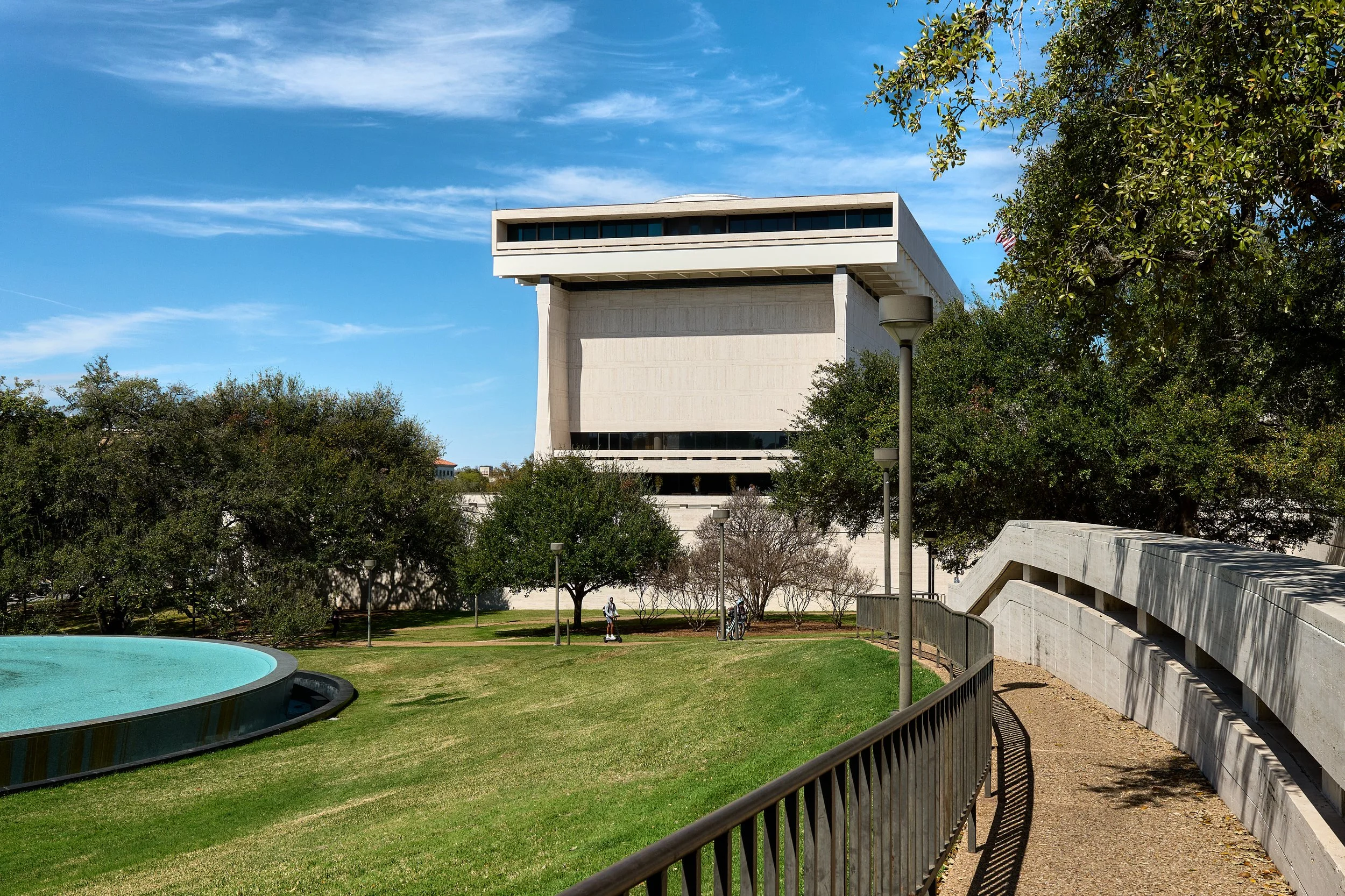
That tension between the grand gesture and the intimate detail is one of the reasons I love photographing architecture. Buildings make big declarations with form and massing, but they whisper with joints, textures, and edges. Good design lives in that in-between space, and so does good photography. We frame the bold moves, but we also go hunting for the places where the light bends and the material softens.
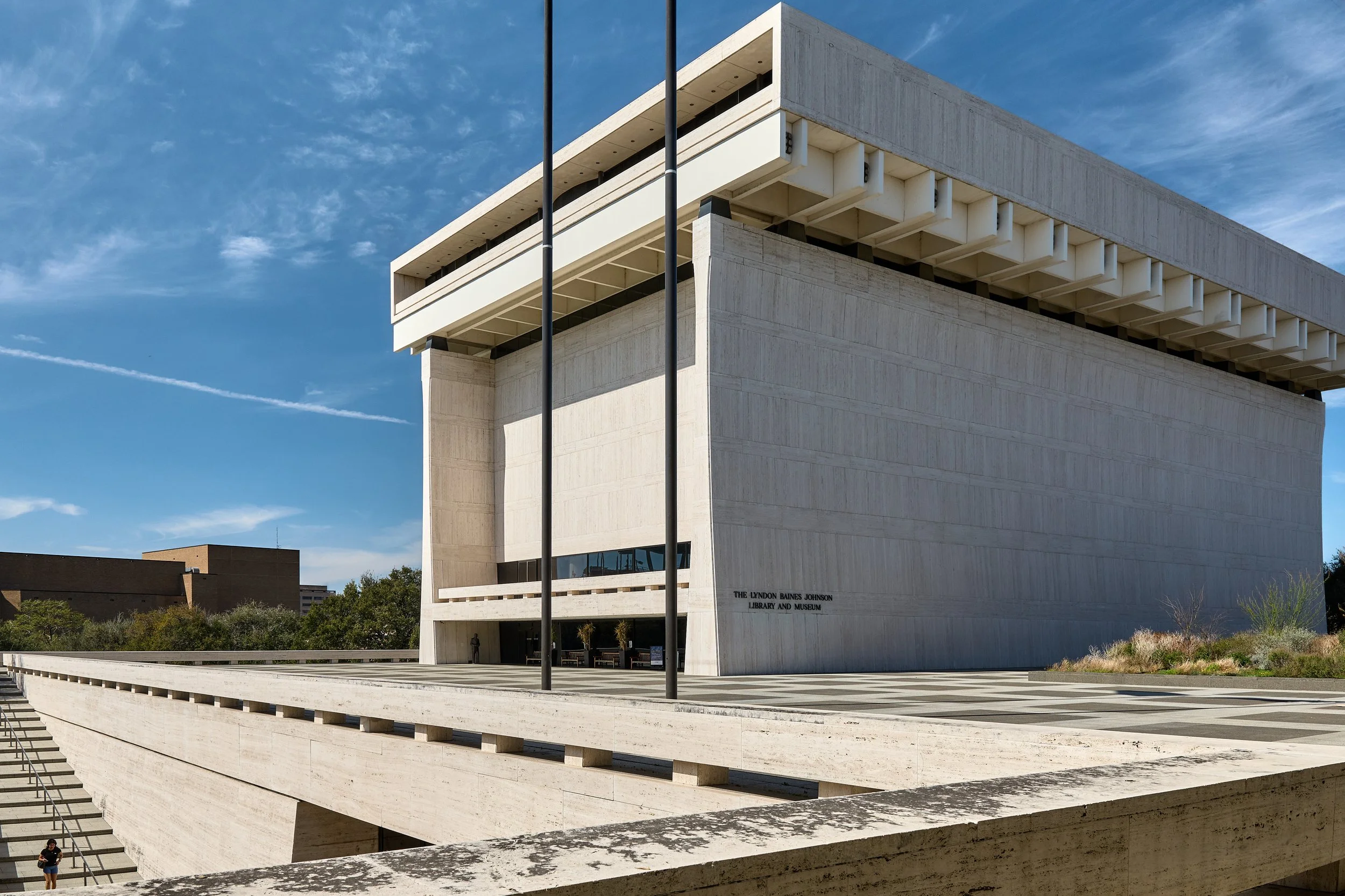
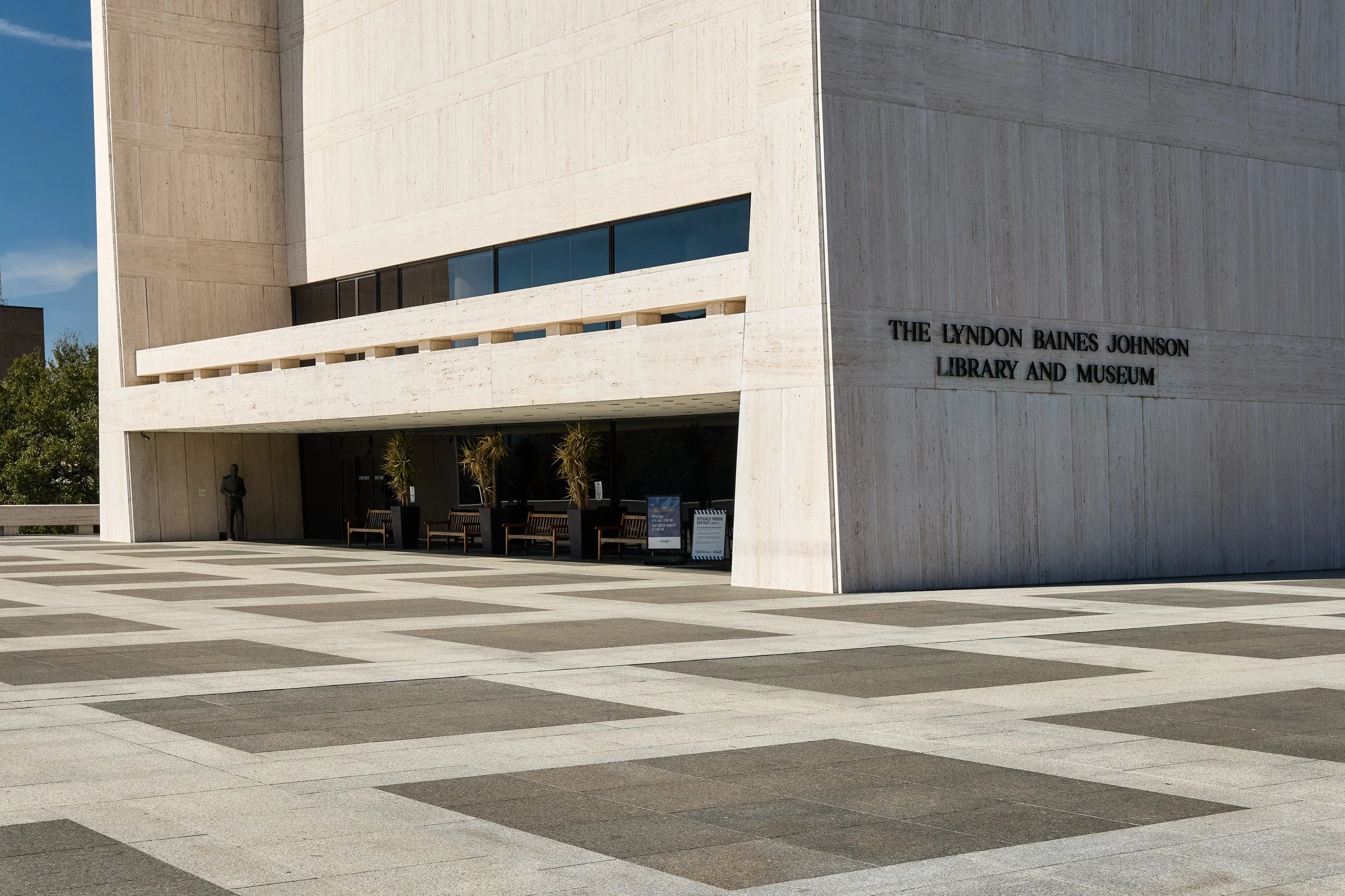
Inside, standing beneath the archive tower, I felt like I was at the base of someone’s memory—orderly, elevated, but undeniably heavy. It made me think about the quiet archival work we do as photographers. Even in commercial assignments, we are, in a way, preserving a moment in the life of a building: a completed project, a newly finished interior, a space ready to meet its public. We document what is, knowing it will eventually become what was.
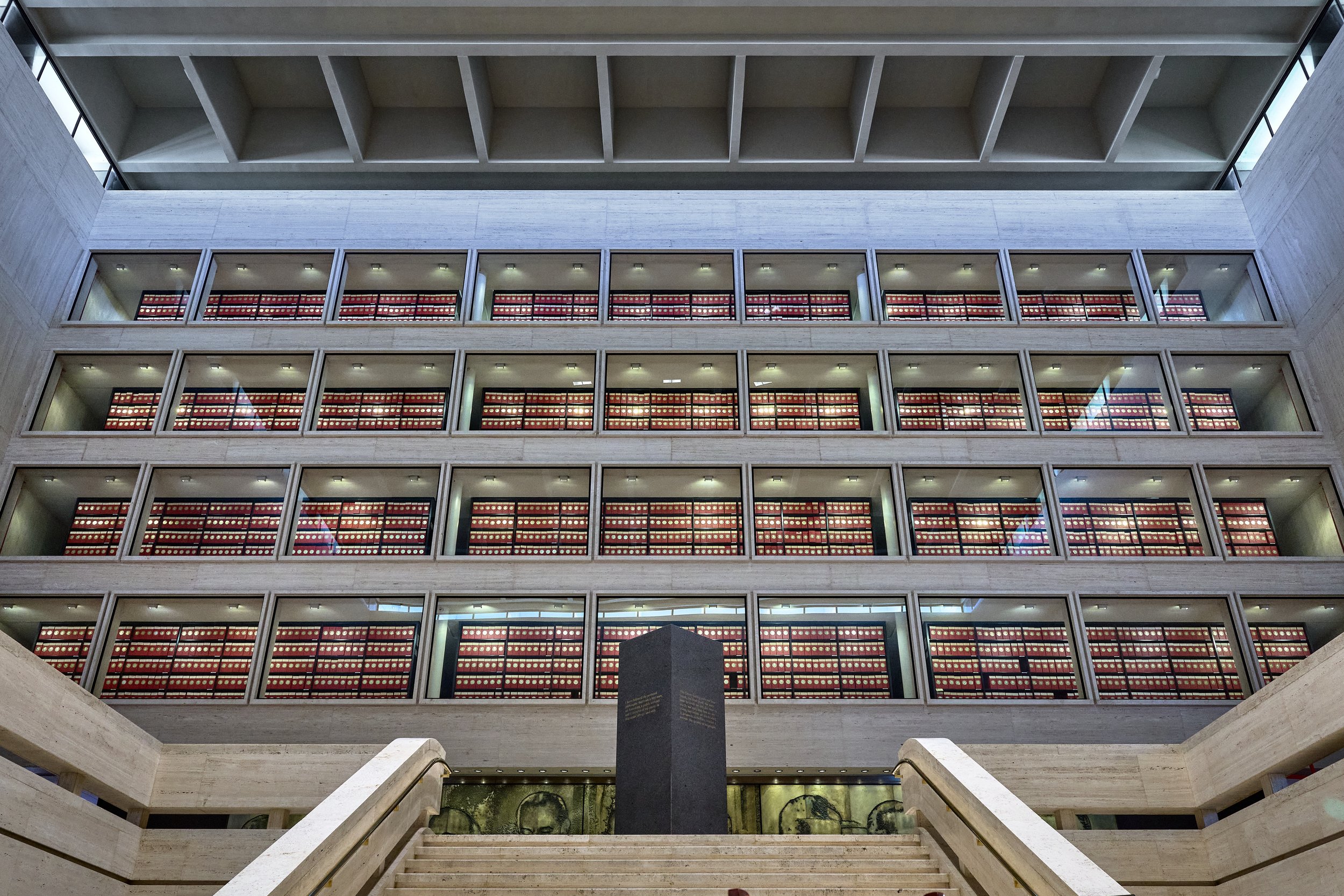
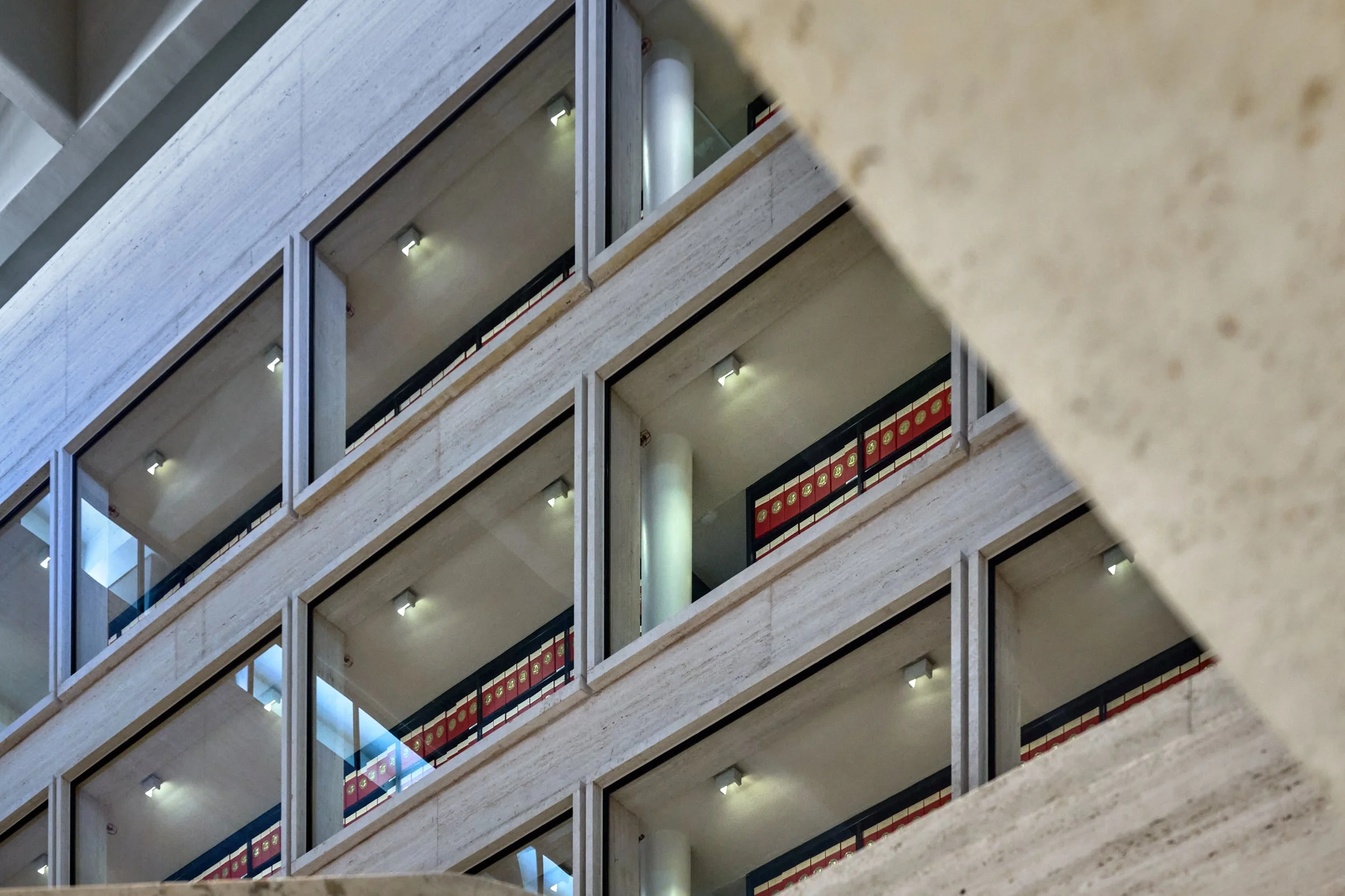
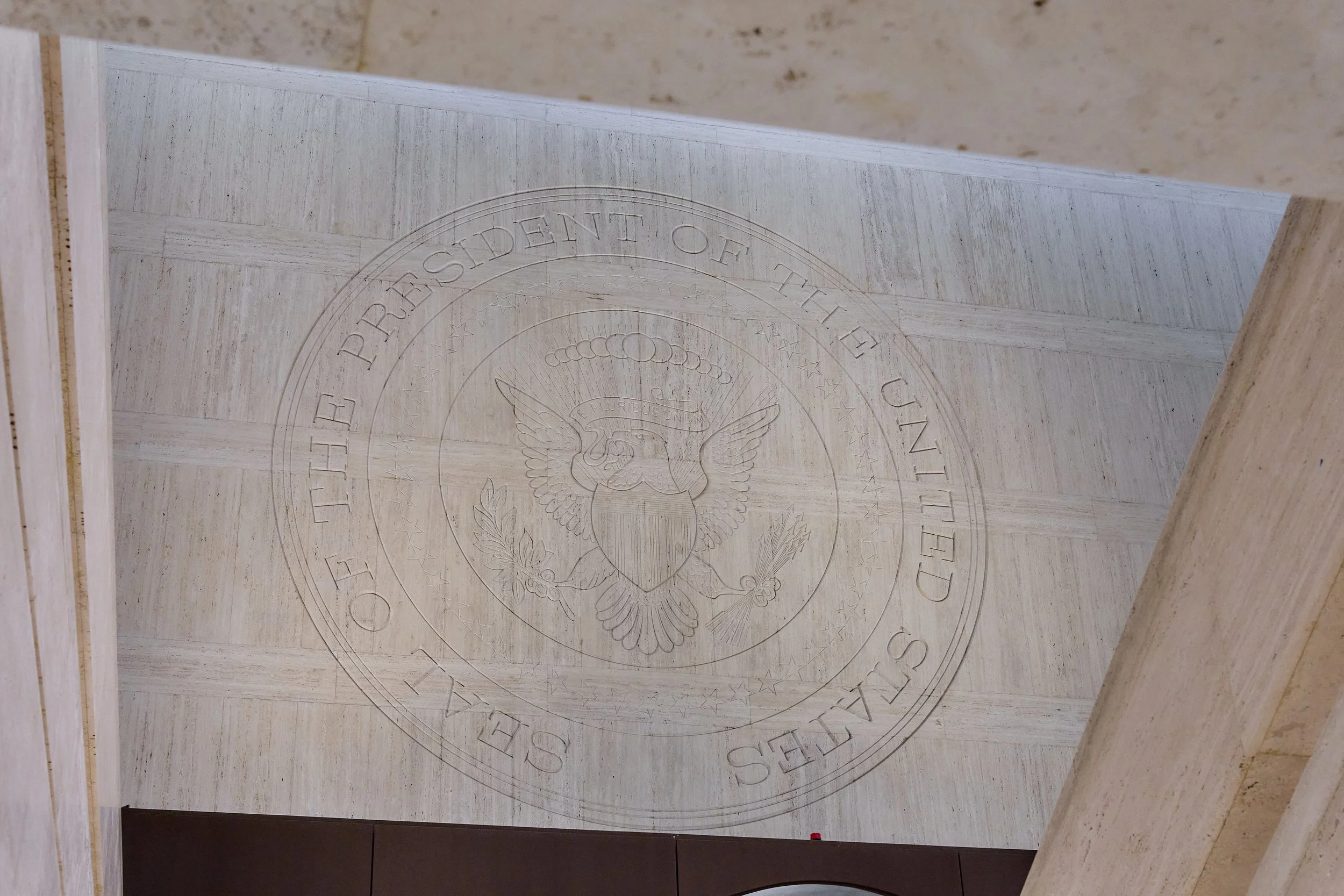
The workshop that followed was another kind of architecture—this time made of people. Stories of difficult shoots, career pivots, doubts, and small victories stacked up like those archive boxes. In a profession that often nudges us toward self-containment, it was disarming and relieving to feel understood. Faith, for me, is a steady undercurrent—a reminder that I’m not walking this path alone—but the experience of sitting with others who see light and space the way I do added a different kind of reassurance.
On the walk back from the library, I kept circling around the idea of weight and lift. The building is undeniably heavy, yet the way it hovers over its base, the way its stone meets the sky, creates a sense of lightness. That’s what good design does, and what good community does too: it lets us carry real weight without being crushed by it.
This trip gave me both—a building that holds history and tension in its bones, and a group of people who reminded me why I pick up a camera in the first place. Somewhere between stone and sky, between solitude and shared experience, is the space where the work really lives. That’s the space I want to keep walking in.