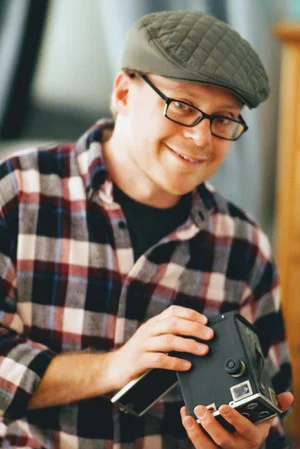
The Journey… So Far, So Good.
The slow season has given me something I don’t usually have: space to look at how I actually work. Over the past few weeks I’ve returned to film, stepped back into the studio with a different mindset, and tried to pay attention to how those choices are reshaping my photography at Brian Riedel Photography—from architecture and everyday objects to portrait and figure work.
Using film to slow down
Film has become the constraint that keeps me honest. With a limited number of frames and no screen on the back of the camera, I can’t rely on overshooting to find something good later. Instead, I have to slow down, recompose, and decide whether a scene is really worth a frame before I press the shutter.
That simple change has started to shift how I see everyday spaces. I’m noticing the way light falls on a wall, how tools and materials sit in a corner, and how those small details say as much about a place as the larger architectural gestures. Film has turned “just walk through and grab coverage” into “stay here a little longer and see what you’ve been missing.”
Shooting with purpose
Returning to film hasn’t made digital work disappear—it’s made it more intentional. Even when I pick up a digital camera now, the habit of asking questions remains: Is this composition working? Am I shooting this because it matters, or because I’m used to filling the card and sorting it out later?
Shooting with purpose doesn’t mean everything has to be serious or perfect. It means paying attention to why an image is being made. That mindset has followed me onto construction sites, into everyday garages, and into the small spaces where consumable products and tools live—the paint rollers, worn gloves, and used materials that quietly tell the story of how a space gets built and used.
Back in the studio, stretching creatively
All of that work eventually comes back to the same place: the studio. Here, the film scans and digital files sit side by side, and the evidence of these changes is impossible to ignore. When I slow down in the field, the edit feels different. There are fewer throwaway frames and more images that hold up under a second and third look.
Studio time has shifted from “process and deliver” to “study and respond.” I’m experimenting with sequences, comparing similar scenes shot on film and digital, and asking what actually feels honest. That process is stretching me creatively—helping refine what I choose to show, how I talk about the work, and where I want this Reflective Thoughts project to go next.
How this impacts client work and portraits
This isn’t just a personal project living off to the side. The way I’m working with film and using the studio is quietly changing how I approach client photography, as well as portrait and figure sessions. On assignments, I’m giving myself room to look for the everyday details that often get ignored: a paint‑streaked ladder, a roller left leaning against a wall, the way a client naturally stands in their own space.
When someone steps into the studio or meets me on location for a portrait, that same attention carries over. The focus is less on racing through a shot list and more on collaborating with the person in front of the camera—watching how they move, listening, and waiting for the small moments that feel real. The technical side still matters, but the goal is for the images to feel lived‑in, not just polished.
This was just a check‑in from the middle of the process. Returning to film, slowing down, and spending more intentional time in the studio hasn’t solved everything—but it has started to change the way I see. The hope is that as this project continues, that shift in attention will shape every part of my work at Brian Riedel Photography, from architecture and everyday objects to the portraits and collaborations that happen both in the studio and out on location.